
The technology behind a predictable result
Imaging and planning tools exist to remove guesswork.
Technology
Every tool below changes a decision we would otherwise have to estimate.
- Digital X-Rays — 90% less radiation for your safety.
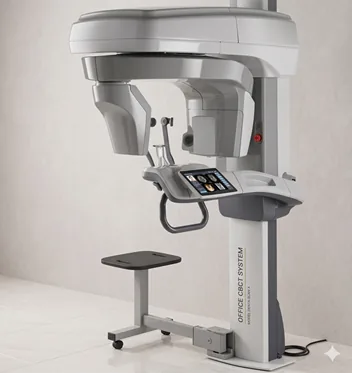
- 3D Cone Beam Imaging — Precision scans for predictable surgical outcomes.
- Intraoral Cameras — High-definition views so you can see what the doctor sees.
- In-House Dental Lab — Faster turnaround times for custom crowns and dentures.

The technology used to plan your care.
Imaging, digital records, and visualization each play a different role. These tools help our team evaluate your needs and communicate a treatment plan.
Intraoral scanning
Digital scans capture the surfaces of your teeth and information about your bite. These records help the clinical and laboratory teams plan selected restorations without conventional impressions in suitable cases.
- Digital impressions
- Bite records
- Restoration planning
3D cone beam imaging
Cone beam computed tomography, or CBCT, provides three-dimensional views of teeth, bone, and surrounding structures. Your dentist determines when this imaging is appropriate for diagnosis or treatment planning.
- 3D anatomy
- Bone assessment
- Implant planning
Digital X-rays
Digital radiographs help your dentist evaluate areas that cannot be seen in a routine visual examination. The type and timing of imaging are selected according to your individual needs.
- Dental assessment
- Treatment planning
- Digital records
Intraoral cameras
A small camera captures close-up views inside your mouth. These images help the team explain findings and discuss your care while showing you the areas being evaluated.
- Close-up images
- Patient communication
- Visual documentation
- Examination
- Images & scans
- Clinical planning
- Lab coordination
Your dentist selects the records and imaging appropriate to your needs; not every appointment requires every type of scan.
See Our Lab Equipment →ARUM NB Implant System
Implant planning brings together your bone anatomy, the implant design, and the restoration that will replace your tooth. The ARUM NB (Natural Balance) system offers fixture options for different bone conditions.
Designs for different bone conditions
ARUM identifies NB I for hard bone and NB II for soft bone. Your dentist evaluates bone quality and the treatment plan when selecting an implant.
Implant connection
The system uses an internal hex connection with an 11-degree taper. This is the interface between the implant fixture and the component that supports the restoration.
Surface & protective packaging
ARUM describes an S.L.A. implant surface and an Ampoule Shield packaging design intended to protect the fixture surface before placement.
Your consultation helps determine which implant and restorative approach are appropriate for your needs.
X550 & X450 milling for denture creation
Computer-aided design and manufacturing (CAD/CAM) connects your dental records to the fabrication of your denture. ARUM milling technology shapes compatible dental materials from a digital design, bringing the planned contours into a physical restoration.
A denture designed digitally
Digital records and bite information guide the design. The team considers tooth position, shape, and the denture base before preparing the manufacturing file.
- Digital records
- Bite information
- Denture design
From material disc to denture components
A milling machine removes material from a compatible disc to create the planned shape. The material, tools, and manufacturing workflow are selected for the denture being made. Finishing, assembly where needed, and a clinical fit check follow.
- Computer-guided milling
- Hands-on finishing
- Fit & bite evaluation
- Records & bite
- Digital design
- Mill
- Finish & assemble
- Evaluate fit
ARUM lists dentures among its milling applications. The specific machine, material, and treatment plan determine the appropriate production workflow.
Explore Our Dental Lab →How the technology changes the result
Computer-Guided Precision
3D planning and surgical guides help us aim for sub-millimeter accuracy on your anatomy — more predictable implant seating, conservative tissue work, and a clearer picture of the outcome before the day of treatment.
Next Generation Digital Dentistry
Digital scans replace messy impressions for many visits — comfortable captures, fewer goopy trays, and smoother handoffs between restorative, surgical, and lab teams.
Advanced Oral Surgery & Implants
Complex extractions, grafting, and implant surgery are coordinated with board-certified specialists and our in-house restorative doctors — one roadmap from surgery through healing checks and final teeth.
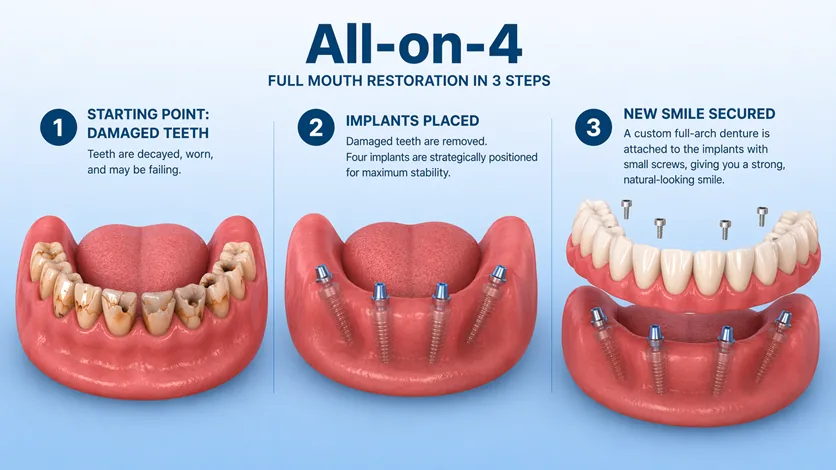
See where digital plans become restorations.
Explore our in-house dental lab to see how laboratory craftsmanship and manufacturing support the care planned with our clinical team.
Book a private consultation
Call (832) 281-2222 or book online in under a minute.