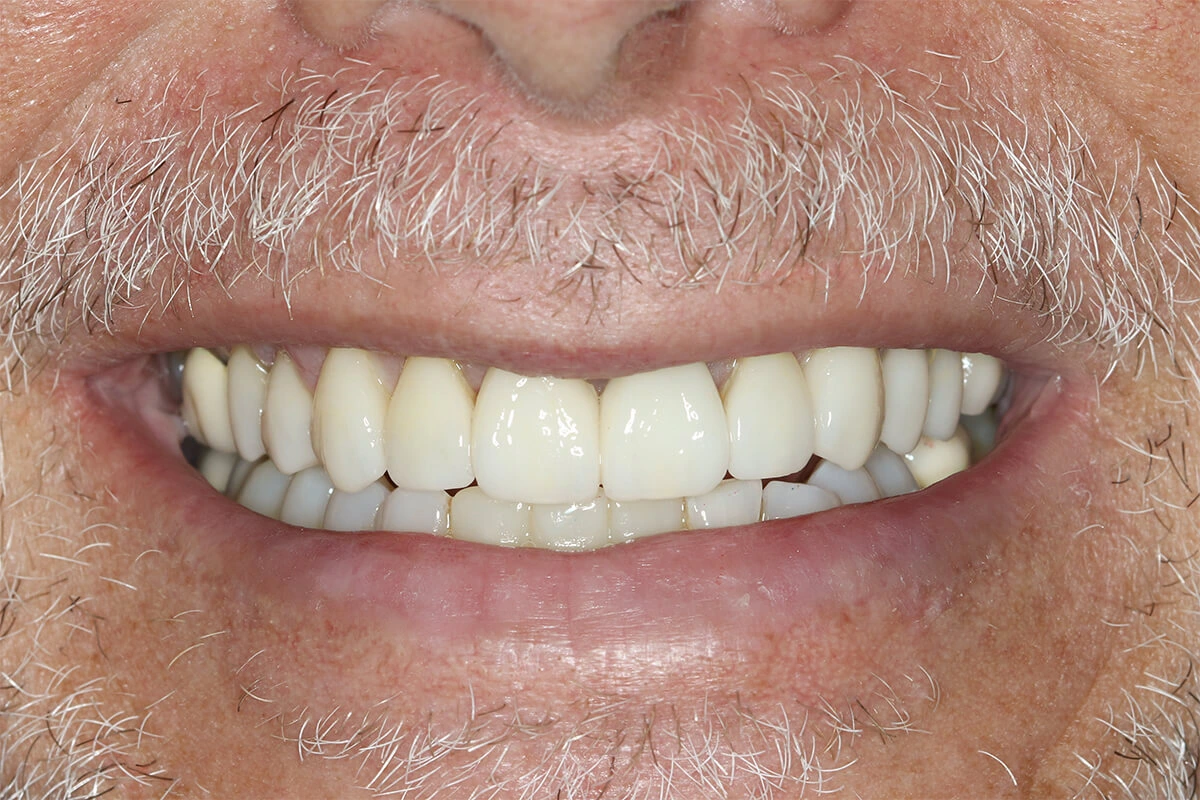
A dental crown is one of the most common and versatile restorations in dentistry. A crown can protect a damaged natural tooth, restore a tooth after root canal treatment, replace a large failing filling, improve the appearance of a severely worn tooth, or serve as the visible tooth attached to a dental implant.
At MAP Dental Center in Houston, digital dentistry and an in-house workflow may allow selected patients to receive a same-day dental crown. The appropriate treatment and timeline depend on the condition of the tooth, the bite, the gums, the material, and the overall treatment plan.
What Is a Dental Crown?
A dental crown is a custom-made restoration that covers and protects a tooth. It is designed to restore the tooth’s shape, strength, size, bite, function, and appearance.
Crowns can be made from ceramic, zirconia, porcelain, or other dental materials. The best material depends on the location of the tooth, the amount of remaining tooth structure, the bite, appearance goals, and clinical requirements. Your dentist will explain the available options for your situation.
When Is a Crown Needed?
A dentist may recommend a crown when a tooth is too weak or damaged for a simple filling to provide predictable support. Common reasons include:
Large Cavities
When decay has removed a significant amount of tooth structure, there may not be enough healthy tooth remaining to support a large filling. A crown can cover the remaining tooth and help protect it during normal chewing.
Broken, Cracked, or Heavily Worn Teeth
A cracked, broken, or severely worn tooth may be at greater risk of further damage. Depending on the location and severity of the problem, a crown may help restore the tooth’s shape and function. Some cracks or fractures require a different treatment, so an examination is important.
After Root Canal Treatment
A tooth that has undergone root canal treatment may need additional protection because it has lost tooth structure from decay, fracture, or the treatment itself. A crown may be recommended when enough tooth remains to support the restoration and the tooth is otherwise suitable for preservation.
Replacing a Large Old Filling
Large restorations can weaken a tooth over time, especially when the remaining walls are thin or the tooth is exposed to heavy bite forces. Replacing a large filling with a crown may provide additional coverage in selected cases.
Cosmetic Improvement
Crowns may also improve the appearance of teeth that are severely discolored, misshapen, damaged, or worn. Because a crown requires preparation of the tooth, less invasive options such as bonding or veneers may be considered when appropriate.
How Is a Crown Used With a Dental Implant?
A dental implant replaces the root portion of a missing tooth. The crown is the part that replaces the visible tooth above the gums. A typical implant restoration has three components:
Dental implant → abutment → dental crown
Dental Implant
The implant is placed into the jawbone and serves as the foundation for the replacement tooth. It must heal and achieve sufficient stability before the final restoration is completed.
Abutment
The abutment connects the implant to the final crown. Depending on the case, it may be a separate component or part of the restoration design.
Implant Crown
The implant crown is designed to look and function like a natural tooth. It is planned around the surrounding teeth, the bite, the gum contour, and the patient’s smile.
Implant Crown vs. Crown on a Natural Tooth
Although both restorations may look similar, they are supported differently. A traditional crown is attached to an existing natural tooth. An implant crown is attached to an implant that has been placed in the jawbone.
In both situations, the goals are a comfortable fit, proper chewing function, a stable bite, cleanable contours, and a natural-looking result. The examination and treatment plan are different because an implant crown must account for the implant, abutment, bone, and surrounding soft tissues.
How Crowns Are Used in Other Treatments
Dental Bridges
A dental bridge can replace one or more missing teeth. Crowns may be placed on neighboring natural teeth or implants to support the replacement tooth or teeth.
Full-Mouth Rehabilitation
Patients with significant tooth wear, bite problems, multiple broken teeth, or several older restorations may need multiple crowns as part of a larger restorative plan. Treatment is planned in stages around oral health, function, and appearance.
Implant-Supported Restorations
Crowns may be used individually on implants or as part of larger implant-supported bridges and full-arch restorations.
Comprehensive Smile Treatment
Crowns may be combined with veneers, implants, whitening, bonding, or orthodontic treatment when a patient needs a broader smile or bite reconstruction. The dentist will recommend only the procedures needed for the planned result.
Same-Day Crowns at MAP Dental Center
Traditional crown treatment commonly requires more than one appointment. At the first visit, the tooth is prepared and an impression or digital scan is taken. A temporary crown may be worn while a laboratory manufactures the final restoration.
With a same-day digital crown workflow, many steps may be completed during one visit for appropriate cases. Digital scanning, CAD/CAM design, in-house milling, and clinical adjustments can help coordinate the process from tooth preparation through final placement.
What Happens During Same-Day Crown Treatment?
1. Examination and Treatment Planning
The dentist evaluates the tooth, surrounding gums, bite, neighboring teeth, and overall oral health. Digital X-rays or other imaging may be recommended. The goal is to determine whether a crown is appropriate and whether same-day treatment is realistic.
2. Tooth Preparation
Damaged or decayed tooth structure is removed, and the tooth is shaped to provide space for the new crown. Additional restorative treatment may be needed before the crown is designed.
3. Digital Scan
Instead of relying only on a traditional impression, the prepared tooth may be digitally scanned. The scanner creates a three-dimensional model of the tooth and surrounding teeth for the design process.
4. Digital Crown Design
Using dental CAD/CAM technology, the team evaluates crown shape, contact with neighboring teeth, bite relationship, tooth proportions, restoration thickness, and appearance. The design is customized to the patient’s mouth.
5. In-House Crown Manufacturing
After the design is approved, the crown may be manufactured using dental milling technology. A ceramic or zirconia restoration can be milled from a dental material block or disk according to the digital design.
6. Fit, Bite, and Final Adjustments
Before the crown is permanently attached, the dentist checks the fit, bite, contact points, shape, comfort, and appearance. Adjustments can be made when necessary.
7. Final Crown Placement
Once the dentist confirms that the restoration is appropriate, the crown is bonded or cemented into place. For qualifying cases, the process from preparation to final crown may be completed in one visit.
Why Patients Choose Same-Day Crowns
- Fewer visits: Selected patients may complete treatment in one appointment instead of returning weeks later for the final crown.
- Less time in a temporary: A same-day final restoration may reduce or eliminate the need for a temporary crown.
- Digital planning: Scanning and CAD/CAM design allow the team to evaluate the restoration’s shape and bite.
- In-house workflow: Coordinating design and manufacturing within the dental center can simplify communication and adjustments.
- Convenience: Fewer visits may make restorative treatment easier to schedule for busy patients.
Can Every Crown Be Completed in One Day?
No. Same-day treatment is not appropriate for every case. Complex cases may require additional laboratory work, specialized materials, gum treatment, root canal treatment, implant healing, bone treatment, or coordination with other procedures.
Implant crowns also follow a different timeline from crowns placed on natural teeth. In selected implant cases, a temporary crown may be possible when the implant has adequate stability and the clinical conditions are appropriate. The permanent implant crown is often placed after the implant has had enough time to integrate with the jawbone.
The timeline depends on bone quality, implant stability, implant location, the bite, gum condition, and healing response. Long-term health should take priority over completing treatment as quickly as possible.
Advanced Digital Dentistry at MAP Dental Center
At MAP Dental Center, digital technology can connect the stages of restorative dentistry:
Examination → digital scan → digital design → in-house milling → final crown
Whether you need a crown for a damaged tooth, a restoration after root canal treatment, an implant crown, or a larger restorative plan, our team can evaluate your condition and recommend the appropriate treatment.
Schedule a Crown Evaluation in Houston
If you have a broken tooth, a large filling, a missing tooth, a damaged crown, or a dental implant that needs restoration, schedule an evaluation with MAP Dental Center. Ask whether you may be a candidate for same-day crown treatment.
MAP Dental Center
2222 Greenhouse Rd, Suite 800
Houston, TX 77084
Call: (832) 281-2222
This article is for general educational purposes. Treatment recommendations and timelines depend on an individual examination, diagnosis, and treatment plan.