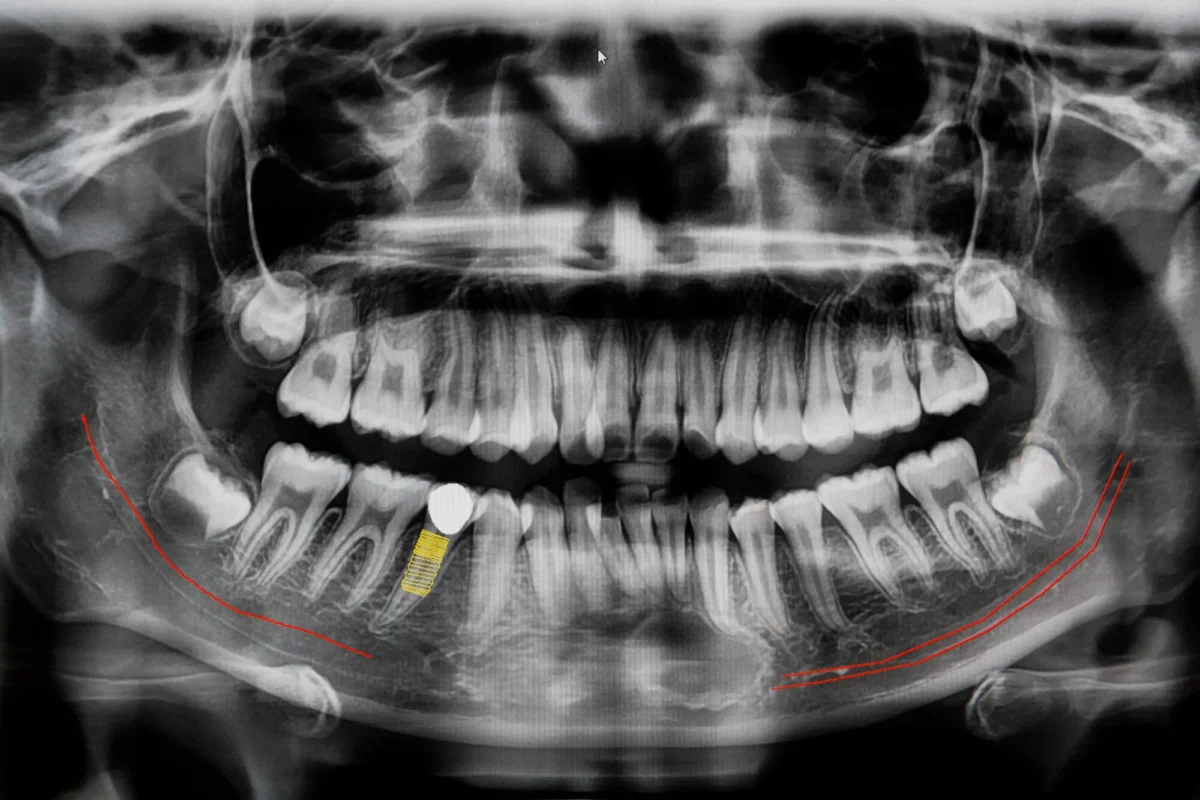
Dental implants are designed to replace missing teeth and support comfortable chewing, speaking, and smiling. However, an implant placed months or years ago can sometimes become painful, loose, swollen, or uncomfortable when you bite. These symptoms should be evaluated rather than ignored.
Depending on the condition of the implant and the surrounding bone, treatment may include controlling inflammation, treating the existing implant, removing a failing implant, rebuilding lost bone, and placing a replacement implant after the area has healed. At MAP Dental Center, the first step is understanding why the implant is causing problems before deciding whether it can be saved or should be replaced.
Why Can a Dental Implant Start Hurting?
Pain around an implant can have several causes. One important condition is peri-implantitis, an inflammatory disease around an implant that may be associated with infection and loss of supporting bone. Other possible causes include:
- Inflammation or infection around the implant
- Loss of supporting jawbone
- An implant that has become mobile or loose
- An implant that did not fully integrate with the bone
- Excessive pressure from the bite or teeth grinding
- An implant positioned at an unfavorable angle
- A problem with the crown, abutment, surrounding gums, or neighboring teeth
Not every painful implant needs to be removed. In selected cases, treatment may control the inflammation and preserve the implant. An examination is needed to determine which option is appropriate.
Step 1: Find the Cause of the Implant Pain
Treatment begins with a comprehensive examination. The dentist may evaluate your gums, bite, implant stability, existing crown or bridge, neighboring teeth, and the amount of inflammation around the site.
Digital X-rays or a 3D CBCT scan may be recommended to evaluate the implant and jawbone in three dimensions. These records can help the dental team assess bone levels, the implant position, nearby anatomical structures, and the condition of the final restoration.
The key question is whether the implant can be treated and maintained or whether removing it would create a healthier foundation for future treatment.
Step 2: Remove a Failing Implant When Necessary
If an implant has significant bone loss, is mobile, is severely damaged, or cannot be predictably treated, removal may be recommended. The technique depends on the implant’s condition, the amount of bone surrounding it, and the location of the site.
When possible, implant removal is planned to preserve as much healthy jawbone as possible. After the implant is removed, the area may be cleaned and inflamed or infected tissue may be addressed. The remaining bone is then evaluated to determine the next stage of treatment.
Step 3: Rebuild Lost Jawbone
A failing implant can be associated with bone loss around the implant site. If there is not enough healthy bone to support a replacement implant, bone grafting may be recommended.
Bone graft material can help restore volume and support the body’s healing process. Depending on the amount and location of the bone loss, grafting may be performed when the old implant is removed or as a separate procedure. The dentist will explain the material, timing, expected healing, and alternatives for your case.
Step 4: Allow the Area to Heal
Some patients may be candidates for replacement treatment sooner, while others need time for the bone and soft tissues to heal. When substantial bone reconstruction is required, several months of healing may be recommended before placing another implant.
Replacing an implant before the site is ready can compromise the result. The timing should be based on the condition of the bone and tissues, not simply on completing treatment as quickly as possible.
Step 5: Digitally Plan the Replacement Implant
Replacing a failed implant provides an opportunity to plan the new implant around the current anatomy and the final tooth. Digital scans, photographs, X-rays, and CBCT imaging may be used to evaluate:
- Available bone volume and density
- The planned position of the final crown or restoration
- The relationship between the implant and the bite
- Nearby teeth, nerves, sinuses, and other anatomical structures
A replacement implant should be planned from the final restoration backward. In simple terms, the team considers the final tooth, the bite, the implant position, and the available bone together. This approach can help create a stable foundation for a natural-looking and functional restoration.
Step 6: Place the New Implant
Once adequate healthy bone is available, the replacement implant can be placed in the planned position. The implant then needs time to integrate with the surrounding bone through a biological process called osseointegration.
In selected cases, a temporary tooth may be provided during treatment. Whether a temporary restoration is appropriate depends on the location of the implant, primary stability, the bite, and the overall treatment plan.
Step 7: Restore the Implant
After the replacement implant has healed and achieved the stability needed for restoration, the final tooth can be completed. Depending on your needs, the restoration may be:
- A single implant crown
- An implant-supported bridge
- Multiple implant restorations
- A full-arch implant restoration
The objective is not simply to replace the old implant. The treatment plan should address healthy bone support, comfortable function, a stable bite, cleanable contours, and a natural-looking smile.
When Should You Contact a Dentist?
Contact a dentist promptly if you notice any of the following around an implant:
- Pain when biting or chewing
- Swelling, bleeding, or gum recession
- Pus, drainage, or a persistent bad taste
- A loose implant, crown, or bridge
- Increasing discomfort or sensitivity
Severe swelling, fever, significant drainage, difficulty swallowing, difficulty breathing, or rapidly worsening pain requires prompt professional attention. Do not wait for symptoms to resolve on their own.
A Failed Implant Does Not Always Mean the End of Treatment
Every implant case is different. Some implants can be treated without removal. Others may need to be removed so infection or damaged tissue can be addressed and the bone can be reconstructed.
With careful diagnosis and treatment planning, the process may move from a painful or failing implant to implant removal, bone reconstruction, digital planning, a replacement implant, and a new restoration. Your dentist can explain the possible stages, risks, alternatives, and expected timeline after examining you.
Schedule an Implant Evaluation in Houston
If an existing dental implant is painful, loose, infected, or does not feel right, MAP Dental Center can evaluate the implant, surrounding gums, and supporting bone. Our team uses digital imaging and treatment planning to discuss whether the implant can be preserved or whether removal and replacement may be appropriate.
MAP Dental Center
2222 Greenhouse Rd, Suite 800
Houston, TX 77084
Call: (832) 281-2222
Schedule an implant evaluation today to understand your treatment options.
This article is for general educational purposes and does not replace an examination or individualized treatment plan from a dental professional.